Real Estate SEO That Generates Seller Leads (The Half of the Strategy Nobody’s Writing About)

Does Connecting Your Google Business Profile to Claude AI Affect Your Rankings? The Honest 2026 Answer for Agencies and Local Brands
Introduction
Here’s the truth nobody tells small business owners: the internet has fundamentally changed how customers find you. Right now, someone in your area is searching for exactly what you offer. The only question is, will they find you or your competitor?
According to research, 97% of customers search online to find a local business. That’s not hype. That’s reality. And if your business isn’t optimized for that search, you’re leaving money on the table.
This is where local SEO services come in.
If you’ve heard the term but weren’t sure what it actually means, you’re not alone. Most business owners think SEO is complicated jargon for tech people. But in reality, it’s about one thing: making sure your business appears when the right people search for you.
This guide breaks down exactly what local SEO services are, how they work, why they matter for small businesses, and what realistic ROI looks like. No fluff. Just practical knowledge to help you decide if local SEO is right for your business.
Who This Guide Is For
Whether you own a plumbing company, dental practice, real estate business, law firm, salon, or any local service-based business, this guide applies to you. If customers search for your services in a specific geographic area (city, region, or service zone), local SEO is for you.
By the end of this article, you’ll understand:
- What local SEO services actually include
- How they work differently from other types of SEO
- Real-world examples of what results look like
- How much to budget and what timeline to expect
- Common mistakes that cost you leads
- How to choose the right partner (or DIY it yourself)
Let’s jump in.
What Are Local SEO Services?
Local SEO Services Explained (Simple Definition)
Local SEO services are strategies designed to help your business appear in search results when people in your geographic area search for what you offer.
That’s it. That’s the core concept.
Let me give you a real example. Imagine someone in Austin, Texas searches “emergency plumber near me” on Google at 2 AM. What appears? That’s local SEO in action.
But here’s what makes local SEO different from regular SEO: it combines three things.
1. Your Google Business Profile (that’s your business listing on Google Maps and Search)
2. Your website is optimized for local keywords (the actual content on your site)
3. Consistent business information across the internet (citations and listings)
All three working together signal to Google: “This business is trustworthy, local, and relevant to what people are searching for.”
| Aspect | Local SEO | National SEO | International SEO |
|---|---|---|---|
| Geographic Focus | City or region | Entire country | Multiple countries |
| Keyword Strategy | Uses geo-modifiers: "near me," city names, neighborhoods | Broad, competitive terms | Language variations, local currencies |
| Example Keyword | "Dentist near me Austin." | "Best dentist in USA" | "Dentist London," "Dentist Paris" |
| Timeline to Results | 3-6 months | 6-12 months | 9-18+ months |
| Competition Level | Medium | High | Very high |
| Equipment Needed | Google Business Profile, local citations | Backlinks, content depth | Localized sites, local hosting |
Why does this matter for you?
If you’re a local business (which most small businesses are), national or international SEO is a waste of money. You’re not trying to rank for “dentist USA.” You’re trying to rank for “dentist in my neighborhood.” Local SEO is the right tool for the job.
Why Is Local SEO Growing So Fast?
Three reasons:
1. Mobile searches are now the majority. People are searching on their phones while they’re out. They want results near them, now. Mobile searches with local intent increased 900% in the last five years.
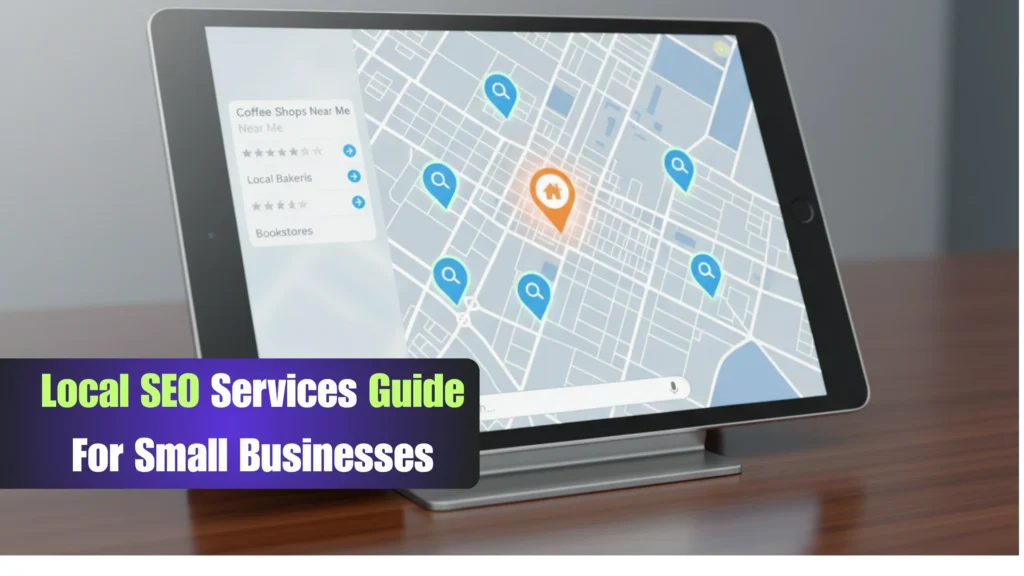
2. Google prioritizes local results. Google figured out early that when someone searches with local intent, they want local businesses. So Google gives prime real estate to local listings. You see the map pack (those three green pins) before you see any traditional ads.
3. Small businesses can actually compete. Before SEO, you needed a massive ad budget to compete with big chains. Now? A smart local SEO strategy lets you outrank a national competitor in your market. It’s the great equalizer.
What Services Are Included in "Local SEO Services"?
When you hire someone for local SEO, here’s what you’re actually getting:
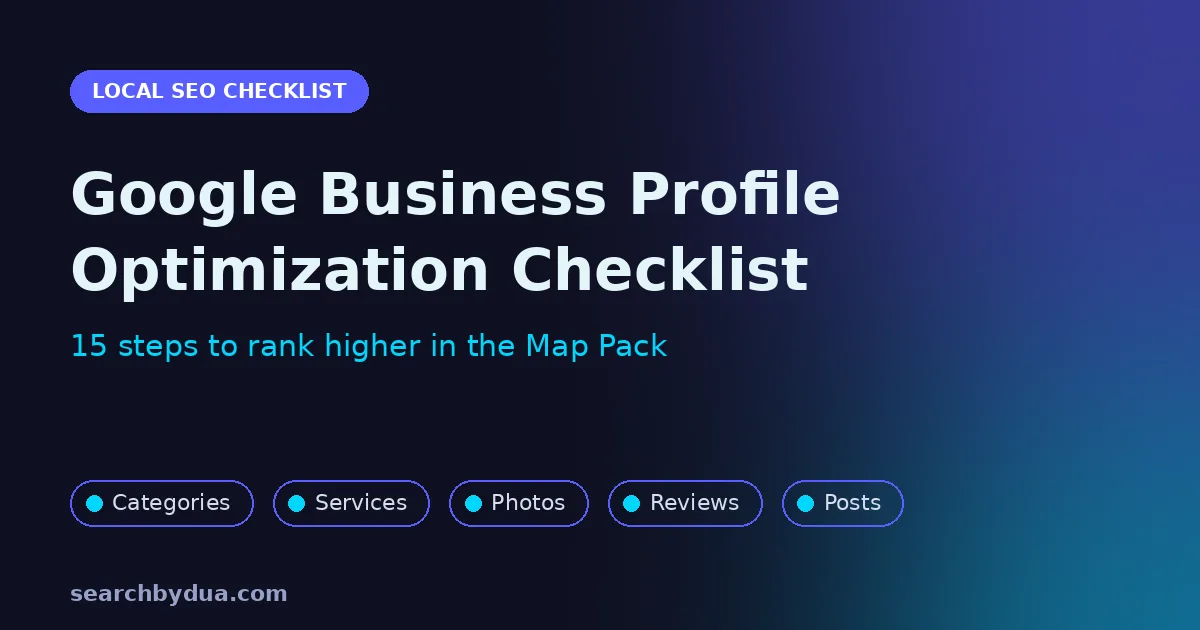
1. Google Business Profile Optimization
This is the most important part. Your Google Business Profile is like your official storefront on Google Maps and Search.
What this includes:
- Claiming and verifying your profile (if you haven’t already)
- Writing a compelling business description
- Adding high-quality photos (interior, exterior, team, products)
- Selecting the right business category
- Adding your service areas (if you don’t have a physical location)
- Posting regular updates (new offers, events)
- Managing customer Q&A
- Responding to reviews professionally
Why it matters: 76% of people click on your Google Business Profile before they even visit your website. If this isn’t optimized, you lose leads before they even get to know you.
2. Local Keyword Research & On-Page Optimization
This is where you make sure your website actually ranks for the searches people in your area are doing.
Real examples:
- “Emergency plumber near me” (not “plumbing services in the USA”)
- “Affordable dental implants Austin” (not “dental implants”)
- “Real estate agent in my neighborhood” (not “real estate”)
The goal: write website content that answers these specific, local questions. Pages about your service areas, location pages, and blog posts addressing local concerns.
3. Local Citation Building & NAP Consistency
A “citation” is basically your business information listed on other websites. Think Yelp, Yellow Pages, Apple Maps, industry directories, etc.
Google uses these citations to verify: “This business is real, the information matches everywhere, and it’s trusted.”
What local SEO services include:
- Auditing where you’re currently listed
- Building citations on important directories (Google, Yelp, Apple Maps, etc.)
- Making sure your Name, Address, and Phone number (NAP) are consistent everywhere
- Cleaning up incorrect or duplicate listings
Why it matters: If your business information is inconsistent across the web, Google gets confused. Confused Google = lower rankings.
4. Review Generation & Reputation Management
Reviews are like currency in local search.
Google uses them to rank you. Customers use them to decide if they’ll call you. They’re that important.
Local SEO services include:
- Setting up systems to encourage customers to leave reviews
- Responding professionally to reviews (both positive and negative)
- Monitoring what people are saying about your business
Fun fact: 72% of customers trust online reviews as much as personal recommendations. So managing your reputation literally affects revenue.
5. Technical SEO for Local Search
This is the “behind-the-scenes” stuff that helps Google understand your business:
- Schema markup (code that tells Google: “This is a local business”)
- Mobile-friendly design (Google loves mobile-first sites)
- Page speed optimization (slow sites = lost leads)
- Proper site structure
6. Ongoing Content & Blog Strategy
This is where you build real authority and capture long-tail searches.
Instead of just optimizing existing pages, you publish new content that answers customer questions:
- “What to expect at your first appointment.”
- “Why do we charge what we charge?” (build trust)
- “Local tips” (for a restaurant, salon, etc.)
- FAQ pages addressing common objections
How Local SEO Services Actually Work
The Local SEO Process: What Happens Step-by-Step
When you work with a local SEO professional or agency, the process typically follows this roadmap:
Phase 1: Discovery & Strategy (Weeks 1-2)
Before anything else, you need a plan.
This phase includes:
- Business audit: What do you do, where do you serve, who are your ideal customers?
- Competitive analysis: Who’s ranking locally right now? What are they doing right?
- Current visibility audit: Are you already appearing in search results? In the map pack? On Google Business Profile?
- Technical audit: Does your website have any major issues preventing it from ranking?
- Keyword research: What are people in your area actually searching for?
Output: A custom roadmap showing exactly what needs to happen and why.
Phase 2: Foundation Building (Weeks 3-6)
Now you fix the basics.
This includes:
- Claiming and fully optimizing your Google Business Profile
- Building or cleaning up local citations (5-10 key directories)
- Making sure your NAP information is consistent everywhere
- Creating location pages if you serve multiple areas
- Fixing basic technical SEO issues (mobile friendliness, site speed, etc.)
- Schema markup implementation
Output: You’re now “findable” in local search. Google understands your business and location.
Phase 3: Content & Optimization (Weeks 7-26)
This is the work that produces sustained growth.
What happens:
- Publishing blog content targeting local keywords
- Optimizing existing pages for local search intent
- Building internal links to guide visitors through your site
- Implementing structured data (schema markup)
- Local link building (partnerships with other local businesses, sponsorships, etc.)
Output: Your website ranks for more local keywords, and visitors engage longer.
Phase 4: Monitoring & Iteration (Month 7+)
The work doesn’t stop after launch. Real local SEO is continuous.
This includes:
- Tracking rankings for important keywords
- Monitoring Google Business Profile insights (how many people found you, what they clicked)
- Analyzing website traffic and conversion data
- Responding to customer reviews
- Adjusting strategy based on what’s working
Output: Month-by-month improvement, measurable results, and growing leads.
Real-World Example #1: Multi-City Local SEO for Healthcare (Non-Profit)
Let me show you how this works in practice.
The Business: Kazim ADHD Trust, a healthcare non-profit offering ADHD diagnosis and therapy across multiple Pakistani cities.
The Problem: Families searching for “ADHD therapy near me” or “ADHD support [city name]” couldn’t find them online. Despite an excellent reputation offline, they were invisible online.
The Local SEO Strategy:
- Optimized Google Business Profile with service descriptions and photos
- Created city-specific landing pages (“ADHD Support in Lahore,” “ADHD Therapy in Karachi,” etc.)
- Published blog content addressing parent concerns (“ADHD Symptoms,” “How to Get Diagnosed,” etc.)
- Built citations on healthcare directories
- Implemented schema markup for healthcare providers
- Set up a review request system
The Results (6 months):
- Organic traffic: 0 → 500+ monthly visitors
- Daily organic leads: 0 → 4–8 per day (without any paid ads)
- Google Business Profile interactions: 1,271
- Calls from Google Business Profile: 320
- Directions requested: 680
The best part? 70%+ of their leads now come from organic search, not paid ads. This means sustainable, predictable lead generation without ongoing ad spend.
Key lesson: Even a non-profit with zero ad budget can dominate local search with the right strategy.
Real-World Example #2: Real Estate Local SEO (Organic Growth)
Here’s another example where the results speak for themselves.
The Business: Bahria Town Listings, a real estate platform focusing on one specific neighborhood in Karachi, Pakistan.
The Starting Point: 1,100 organic visitors per month (respectable, but not growing).
The Local SEO Strategy:
- Intent-driven content (buyers want guides, comparisons, investment tips, not just listings)
- Sector-specific pages (apartment guides, investment comparisons, neighborhood lifestyle content)
- Local authority building (coverage of schools, events, and infrastructure in the area)
- Schema markup for property listings
- Internal linking structure guiding visitors from research to actual properties
The Results (12 months):
- Organic traffic: 1,100 → 15,000+ monthly visitors
- Ranking in the top 3 positions for 35+ real estate keywords
- Daily verified leads: 10-15 (from organic search alone, no paid ads)
- Session duration: 3-4 minutes per visitor (3-8x longer than industry average)
- Returning visitors: 50%+
How did they do it without paid ads or expensive backlink campaigns?
Answer: They focused on answering customer questions first, not just listing properties. Content like “Best Sectors for First-Time Buyers in Bahria Town” and “Schools & Infrastructure Guide” attracted engaged, researching buyers. Once these visitors found the listing section, they were already sold on the neighborhood.
Key lesson: In local SEO, the businesses that win aren’t always the flashiest. They’re the ones who understand what people are actually searching for and answer those questions first.
What Local SEO Services Cost
Honest Pricing: What You Should Budget
Let’s talk money. Because that’s probably what you care about most.
Common Pricing Models
Monthly Retainer (Most Common)
This is where a local SEO professional manages your optimization on an ongoing basis.
- Small businesses: $500-$1,500/month
- Medium businesses: $1,500-$3,500/month
- Large/Multi-location businesses: $3,500-$10,000+/month
What’s typically included:
- Google Business Profile optimization and management
- Monthly blog posts or content
- Citation building and cleanup
- Review management
- Analytics and reporting
- Monthly optimization recommendations
Project-Based Pricing
Sometimes you just need initial work done, then you manage it yourself.
- Initial SEO audit: $1,000-$3,000
- Google Business Profile setup: $300-$800
- Citation cleanup and setup: $500-$2,000
- Technical SEO fixes: $1,500-$5,000 depending on complexity
DIY or Hybrid Approach
If you want to save money and have time to learn:
- DIY tools: $50-$500/month (Google Business Profile is free, but tools like BrightLocal, Semrush Local, or Moz Local help with tracking)
- Freelancer for specific tasks: $30-$100/hour
- Hybrid: Pay someone to set up the foundation, then manage it ongoing yourself
What Affects Your Price?
Why does one business pay $500/month and another pays $3,500/month?
1. Market Competition: A less competitive market = lower cost. Getting a plumber to rank in a small town is cheaper than ranking in New York City.
2. Business Type: Service-area businesses (like contractors) need more work than brick-and-mortar. Multi-location businesses are more complex than single-location businesses.
3. Current State: If your Google Business Profile is unclaimed and your citations are a mess, there’s more cleanup work needed initially.
4. Goals: Do you want to rank for 5 keywords or 50? That changes the content and timeline needed.
Red Flags in Local SEO Pricing
Watch out for these:
❌ Guaranteed #1 ranking. Impossible. Google doesn’t allow it. Anyone promising this is lying.
❌ No scope of work. “I’ll do your SEO for $200/month” without explaining what that means. That’s vague.
❌ Ultra-cheap pricing. If someone offers local SEO for $200/month, you’re probably getting minimal work.
❌ Contracts longer than 6 months. Avoid being locked in. Local SEO results take time, but you should have an exit option after 3-6 months.
❌ No reporting. You should see rankings, traffic, leads, and ROI. If they don’t report, they’re hiding something.
ROI & Timeline Expectations (Be Honest With Yourself)
Here’s what realistic looks like:
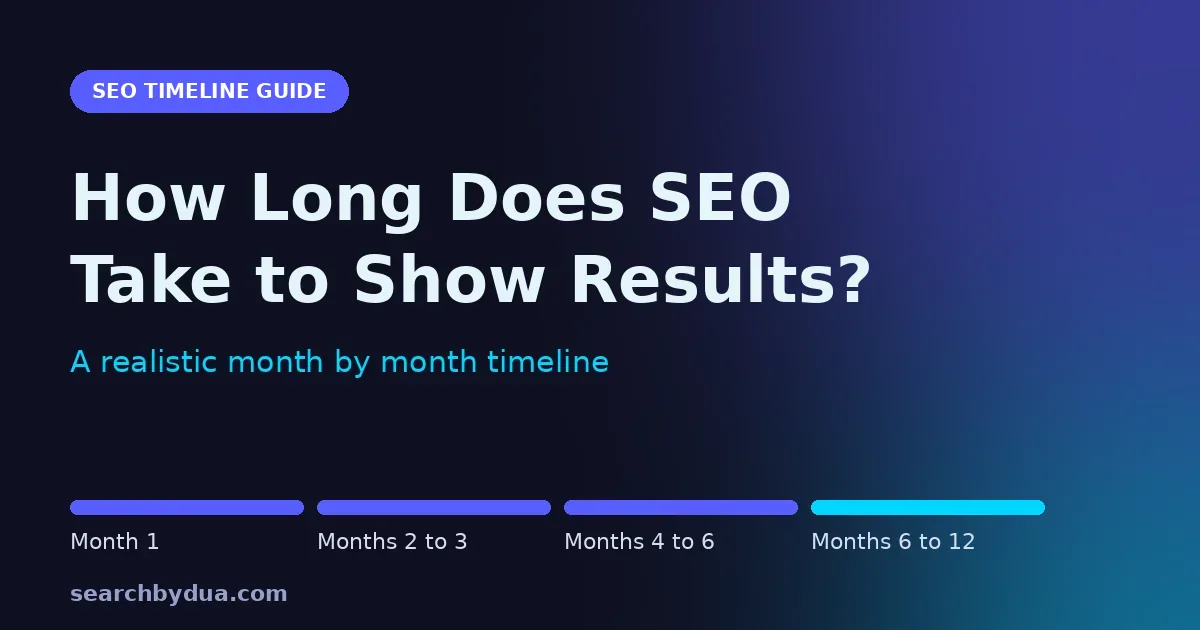
Timeline to see results:
- Months 1-2: Foundation work, no visible traffic increase yet
- Month 3: First ranking improvements, slight traffic increase
- Months 4-6: Noticeable traffic increase, early leads
- Months 7-12: Compound growth, clear ROI
- Year 2+: Sustainable, increasing leads (and less monthly investment needed)
Lead generation ROI depends on your industry:
- Dentist: 5-10 new patients/month = $2,500-$5,000 revenue/month
- Plumber: 8-15 jobs/month = $3,000-$8,000 revenue/month
- Real estate: 10-20 qualified leads/month = varies widely
- Lawyer: 3-8 quality leads/month = $5,000-$20,000+ depending on case value
Payback period: Most small businesses see ROI within 6-12 months, especially if they’re getting consistent leads before local SEO (meaning the baseline already exists).
Does It Make Sense Financially?
Simple math:
- If local SEO costs you $1,000/month
- And brings you 5 new customers/month
- And each customer is worth $1,000+ in revenue
- That’s a no-brainer
But if you’re getting 0 leads from local SEO? That’s a different story. The strategy might be wrong, the implementation might be poor, or your market might not have search volume.
The key: Track results from day one. If you’re not seeing improvement after 4-6 months, adjust.
Key Local SEO Services Explained in Detail
Google Business Profile Optimization
Let’s start with the most important piece.
Your Google Business Profile is basically your official resume on Google. When someone searches for your business, Google uses this profile to decide what information shows up.
Why it matters:
- 76% of people search for your location before anything else
- A complete profile gets 7x more engagement than an incomplete one
- Photos drive clicks and help people decide to visit
What optimization includes:
- Verification: Making sure you actually own the business
- Complete information: Business hours (with holiday hours), phone number, address, website
- Description: A compelling 750-character description of what you do
- Photos: High-quality photos of your interior, exterior, team, products, and happy customers
- Attributes: Features specific to your business (wheelchair accessible, parking available, etc.)
- Posts: Regular posts about new services, promotions, or events
- Q&A: Answering questions customers ask about your business
- Review management: Monitoring reviews, responding quickly, generating new ones
Real tip: Keep your Google Business Profile updated. Outdated hours alone lose you leads.
Local Keyword Research & Optimization
You can’t optimize for keywords you don’t know people are searching for.
Local keyword research is different from regular keyword research. You’re not looking for “plumbing services.” You’re looking for “24-hour plumber near me, Austin” and “emergency plumber in South Austin.”
What this includes:
- Identifying 20–50 local keywords people actually search for in your area
- Creating or optimizing pages to target these keywords
- Adding location modifiers (city names, neighborhoods, “near me”)
- Writing content that answers the specific intent behind each search
Example: Instead of a generic “Services” page, you might create:
- “Dental Cleaning in Austin”
- “Affordable Dental Implants near South Austin”
- “Teeth Whitening Austin—Same-Day Appointments”
Each page targets a specific local search with a specific intent.
Local Citation Building
A citation is basically your business information published on another website.
Google uses citations to verify your business is real and trustworthy. It’s like having multiple people confirm: “Yes, this business exists.”
Key citations include:
- Google Business Profile (most important)
- Yelp
- Apple Maps
- Industry-specific directories (Healthgrades for doctors, Avvo for lawyers, etc.)
- Yellow Pages
What local SEO includes:
- Auditing where you’re currently listed
- Building new citations on important directories
- Ensuring NAP (Name, Address, Phone) consistency across all listings
- Cleaning up duplicate or incorrect listings
Review Management
Reviews are trust signals. Google ranks you partly based on review volume and rating. Customers decide based on reviews.
What this includes:
- Request system: Making it easy for happy customers to leave reviews
- Monitoring: Watching for new reviews across all platforms
- Responses: Responding to reviews (positive and negative) professionally
- Strategy: Identifying which customers are most likely to leave great reviews
Pro tip: Respond to negative reviews calmly and helpfully. It shows future customers you care about feedback.
Schema Markup & Technical SEO
This is the “code behind the scenes” that helps Google understand your business.
Local schema markup tells Google:
- This is a local business
- Here’s my address, phone, and hours
- Here are my reviews
- Here’s what I do
Technical SEO fixes:
- Mobile optimization (Google prioritizes mobile-friendly sites)
- Page speed (slow sites lose leads)
- Duplicate content issues
- Broken links
- Proper heading structure
Content & Blog Strategy
Publishing content targeting local keywords builds authority and captures searches you might otherwise miss.
Examples:
- “What to Expect at Your First Dental Visit” (builds trust)
- “Why Professional Cleaning is Worth the Cost” (addresses objections)
- “Local Tips for [City Name]” (shows you know the area)
- FAQ pages (capture “how to” searches)
How to Choose a Local SEO Agency (or Do It Yourself)
Red Flags: What NOT to Do
Before you hire anyone, watch out for these:
❌ No case studies or references. If they can’t show you past work, they don’t have past work.
❌ Promises of guaranteed rankings. Google doesn’t allow guarantees. Period. Anyone saying they can guarantee the #1 position is lying.
❌ Won’t explain their strategy. If they’re vague about what they’ll do, they probably don’t have a real strategy.
❌ Requires long-term contracts (12+ months). Avoid lock-in agreements. You should be able to pause or stop after 3-6 months if results aren’t there.
❌ Doesn’t ask about your business. A good SEO person asks lots of questions: How many competitors? What’s your current visibility? What’s your budget? If they jump straight to pricing, they’re not customizing anything.
❌ One-size-fits-all approach. Real SEO is customized. A dental practice needs different keywords than a plumbing company. A single-location business needs a different strategy than a multi-location.
❌ All talk, no metrics. They should discuss rankings, traffic, leads, and revenue. Not just vague “visibility improvements.”
Green Flags: What to Look For
✅ Case studies with real numbers, “Increased organic traffic 400%” is better than “increased visibility.” Real numbers show confidence in results.
✅ Transparent methodology. They explain: Here’s what we do, here’s why, here’s what to expect.
✅ Realistic timelines, “3-6 months to see results,” are realistic. Anyone promising results in 30 days is selling BS.
✅ No long-term contracts. Short-term options show confidence. If they were confident, they wouldn’t need to lock you in.
✅ Industry experience If they’ve worked with businesses like yours before, they already understand your market.
✅ Clear communication & regular reporting. You should get monthly reports showing rankings, traffic, leads, and revenue impact.
✅ They ask good questions. Before they propose anything, they want to understand your business, goals, and current situation.
Questions to Ask Before Hiring
Before you sign anything, ask these:
1. “Can you show me a case study similar to my business?”
- They should have real results to show, not just testimonials.
2. “What’s your exact strategy for my business, and why?”
- A custom answer, not a template. You want to hear thinking, not scripted answers.
3. “How long did it take your clients to see results, and what did ‘results’ look like?”
- Realistic timeline and definition of success.
4. “How will you measure success? How often will I see reports?”
- Monthly reports with rankings, traffic, leads, and revenue impact.
5. “What’s your pricing and what’s included?”
- Total clarity. No surprises later.
6. “Can I cancel if I’m not happy with progress?”
- Avoid contracts longer than 6 months.
7. “Who will be my point of contact?”
- You should know who you’re working with day-to-day.
8. “What happens after 12 months?”
- Does the investment decrease? Do you need to maintain or keep growing?
Should You DIY Local SEO?
DIY works if:
- You have time to learn and implement
- Your market is less competitive (smaller town)
- You’re willing to make mistakes and learn
- You’re comfortable with a slower timeline
You should hire someone if:
- You don’t have 5-10 hours/week to dedicate to it
- Your market is competitive (you need fast results)
- You want accountability and expertise
- You’re risk-averse about hiring the wrong
Best of both worlds: Hire someone for the foundation (3 months), then manage ongoing yourself if you have time.
Common Local SEO Mistakes Costing You Leads
Mistake #1: Inconsistent Business Information (NAP)
Your business name, address, and phone number vary across different websites.
Example: Your website says “John’s Plumbing,” but Yelp says “Johns Plumbing” (no apostrophe). Your address has a zip code somewhere, missing elsewhere.
Why it kills rankings: Google gets confused. It doesn’t know if it’s the same business. Your citations don’t help you rank because they seem like different businesses.
The fix: Audit all your listings right now. Create a master list of correct information. Go through every citation and make it consistent.
Mistake #2: Ignoring Your Google Business Profile
You claimed the profile but never filled it out. No photos, incomplete description, outdated hours.
Why it kills leads: People click on your profile and see incomplete information. They leave and call your competitor instead.
The fix: Complete your profile 100%. Add photos, write a compelling description, set accurate hours (including holidays), respond to reviews, post regularly.
Mistake #3: Thin Content on Location/Service Pages
Your website has a page that says “Serving Austin and surrounding areas” but nothing else. That’s it.
Why it kills rankings: Google has nothing to rank. You haven’t answered any questions or shown relevance to Austin specifically.
The fix: Create real content. “Plumbing Services in Austin” should explain what services you offer, why Austin residents choose you, testimonials from Austin customers, etc. At least 300 words of real content.
Mistake #4: Not Managing Reviews
Reviews come in. You ignore them. Or worse, you ignore bad reviews and hope they go away.
Why it kills business: Potential customers see you don’t care. Bad reviews stay visible. You lose trust.
The fix: Respond to every review. Thank people for positive reviews. Address concerns in negative reviews professionally. Implement a system to encourage happy customers to leave reviews.
Mistake #5: Wrong Keywords or No Keywords
You’re optimizing for keywords nobody searches for in your area.
Example: A real estate agent optimizing for “luxury homes worldwide” instead of “houses for sale in [neighborhood].”
Why it kills rankings: You’re competing for the wrong searches.
The fix: Research actual local keywords people search for. Use tools like Google Trends, Google Search Console, or SEMrush Local to see what people in your area actually search.
Mistake #6: Conflicting Information
Your website says one phone number, Google Business Profile says another. Hours are different on different listings.
Why it kills leads: Confused customers call the wrong number or show up when you’re closed. They move to your competitor.
The fix: Audit everything. Create a master document. Update all listings.
Mistake #7: Website Doesn’t Match Search Intent
Someone searches “emergency dentist open now” and lands on your general “About Us” page instead of a page specifically addressing emergency appointments and hours.
Why it kills conversions: The page doesn’t match what they searched for. They bounce.
The fix: Create pages that directly answer search intent. “Emergency Dental Care” page for emergency searches. “Affordable Cleanings” page for cost-conscious searchers.
Measuring Local SEO Results
Key Metrics to Track
How do you know if local SEO is working? Here are the metrics that actually matter:
Rankings
Track how many keywords you rank for in the top 10 (and especially top 3).
- Month 1-2: No change expected
- Month 3-4: Start ranking for a few keywords
- Month 6+: Ranking for 20-50+ local keywords
Tools: Google Search Console (free), SEMrush Local, BrightLocal, Moz Local
Traffic
How many people visit your website from organic search (not ads)?
- Baseline: Track this from day one
- Growth: 30-100% increase by month 6 is realistic
- Quality: Are these engaged visitors or bounces?
Tools: Google Analytics (free), Google Search Console
Visibility
How often does your business appear in search results (impressions)?
- Target: 20-100+ monthly impressions by month 3
- Healthy trend: Increasing month-over-month
Tools: Google Search Console, BrightLocal
Leads and Calls
This is what actually matters, real business.
Track:
- Phone calls from Google Business Profile
- Website form submissions from organic traffic
- Actual customers (revenue, not just leads)
Tools: Google Business Profile (free), call tracking software like CallRail, conversion tracking in Google Analytics
Review Impact
- Number of reviews
- Average rating
- Review sentiment (positive vs. negative)
Tools: Google Business Profile (free), BrightLocal, Podium
Realistic Timeline Expectations
People ask: “When will I see results?”
Here’s honest:
Month 1: You’ll see work happening (foundation being built), but no traffic increase yet. Stay patient.
Month 2: Still early. Maybe slight movements in rankings for easier keywords.
Month 3: This is usually when people start seeing measurable changes. A 10-30% traffic increase isn’t uncommon.
Month 4-6: Real growth happening. Leads should be coming in consistently.
Months 7-12: Compound growth. Results accelerate as authority builds.
Year 2+: Diminishing returns on new investment, but momentum means growth continues.
Honest Conversation About Competition
If your market is highly competitive (like Dallas dentistry), it takes longer.
If your market is less competitive (like a small town or niche service), results come faster.
Factor this into your expectations. A plumber in Austin might take 8 months. A plumber in a 50,000-person town might take 3 months.
Tools for Tracking
Free:
- Google Search Console (rankings, traffic, keywords)
- Google Analytics (website traffic, behavior)
- Google Business Profile Insights (profile performance)
Paid (worth it):
- BrightLocal ($100-$500/month): Ranking tracking, citation audits
- SEMrush Local ($100+/month): Competitive analysis, local rankings
- Moz Local ($100+/month): Rankings, local SEO tracking
- CallRail ($50+/month): Track phone calls from Google
Local SEO Services for Specific Industries
Different industries need slightly different approaches. Here’s what matters for yours:
Healthcare (Doctors, Dentists, Therapists)
What matters most:
- Trust signals (credentials, certifications, reviews)
- Local visibility for service areas
- Patient education content
Local SEO focus:
- Emphasize credentials and experience
- Publish patient testimonials
- Create educational content (“What to expect,” “Common questions”)
- Optimize for “near me” searches
- Manage reviews carefully (healthcare reviews are crucial)
Example keywords:
- “Dentist near me accepting new patients.”
- “Best therapist for anxiety in [city]”
- “Orthopedic surgeon near [location]”
Home Services (Plumbing, Electrical, HVAC, Roofing)
What matters most:
- Emergency/urgency keywords (“24-hour plumber,” “emergency plumber now”)
- Service area pages (you’re not location-based, you travel)
- Trust and reliability
Local SEO focus:
- Service area pages for each city you serve
- Emergency/urgency keywords
- Before-and-after photos
- Customer testimonials with results
- Fast response time messaging
Example keywords:
- “Emergency plumber near me”
- “Roof repair Austin”
- “24-hour electrician open now.”
Real Estate
What matters most:
- Neighborhood guides and lifestyle content
- Investment insights (for investors)
- Listings (obviously)
- Agent authority
Local SEO focus:
- Neighborhood guides (“Moving to [neighborhood]? Here’s what to know”)
- Investment-focused content (property appreciation, ROI, market trends)
- Lifestyle content (schools, restaurants, parks)
- Agent bios and testimonials
- Hyper-local keyword targeting (specific neighborhoods, streets)
Example keywords:
- “Houses for sale in [specific neighborhood]”
- “Best neighborhoods for families in Austin”
- “Real estate market trends [city]”
Professional Services (Law, Accounting, Consulting)
What matters most:
- Expertise and authority
- Specific service areas (contract law, tax, etc.)
- Client results and testimonials
Local SEO focus:
- Thought leadership content
- Case studies and client results
- Service-specific pages
- Local partnerships and sponsorships
- Authority building
Example keywords:
- “Divorce attorney in Austin”
- “Tax preparation services near me”
- “Business consultant in [city]”
Retail & Restaurants
What matters most:
- Hours and location (people search when they want to visit)
- Photos and atmosphere
- Menu/product info
- Reviews and ratings
Local SEO focus:
- High-quality photos (interior, food, products)
- Regular Google Business Profile posts
- Menu optimization (for restaurants)
- Review management
- Location accuracy
Example keywords:
- “Best coffee near me”
- “Italian restaurants in downtown Austin”
- “Hair salon near me open now.”
Conclusion & Next Steps
What We Covered
You now understand:
- What local SEO services are: Strategies to help your business appear in local search results
- Why it works: Google prioritizes local results, mobile searches are increasing, and small businesses can compete
- The process: Discovery → Foundation building → Content & optimization → Monitoring & growth
- Real results: A healthcare non-profit went from invisible to 4-8 daily leads. A real estate site grew from 1,100 to 15,000+ monthly visitors
- Realistic costs and timelines: 3-6 months to see results, $500-$10,000+/month, ROI typically within 6-12 months
- Common mistakes: Inconsistent business info, ignoring Google Business Profile, thin content, not managing reviews
- How to choose a partner: Look for case studies, a clear strategy, transparency, and realistic expectations
Your Next Steps
1. Check your current visibility
- Search your business name: Do you appear in the local pack (map results)?
- Search your main service keyword + location: Where do you rank?
- Check your Google Business Profile: Is it complete?
2. Audit your competition
- Search local keywords in your area
- See who’s winning (they’re doing something right)
- Notice what they’re doing on their Google Business Profile and website
3. Decide your path
- DIY route: Learn and implement yourself (tools: BrightLocal, Semrush Local)
- Hybrid route: Hire someone for the foundation, manage ongoing
- Full-service route: Hire an agency to handle everything
4. Get started
- If hiring: Ask the questions from section 6
- If DIY: Start with Google Business Profile optimization
- Either way: Track baseline metrics (rankings, traffic, leads) from day one
Final Thought
Right now, someone in your area is searching for exactly what you offer. They’re deciding right now who to call based on what they find online.
Local SEO services aren’t about ranking for the sake of ranking. They’re about being visible when the right customer is searching. They’re about turning search demand into real business.
The businesses winning locally aren’t always the biggest or flashiest. They’re the ones who understood what customers are searching for and made sure they show up.
That can be you.
More Resources
Want to go deeper?
- Read our Real Estate SEO case study: How we grew organic traffic from 1,100 to 15,000+ monthly visitors without ads
- Check out our Local SEO case study: How a healthcare non-profit went from invisible to generating 4-8 daily leads
- Browse our Blog for ongoing SEO tips and strategies
Have questions?
Feel free to reach out. We’re happy to discuss your specific situation and what local SEO could do for your business.

Related posts