Does Connecting Your Google Business Profile to Claude AI Affect Your Rankings? The Honest 2026 Answer for Agencies and Local Brands
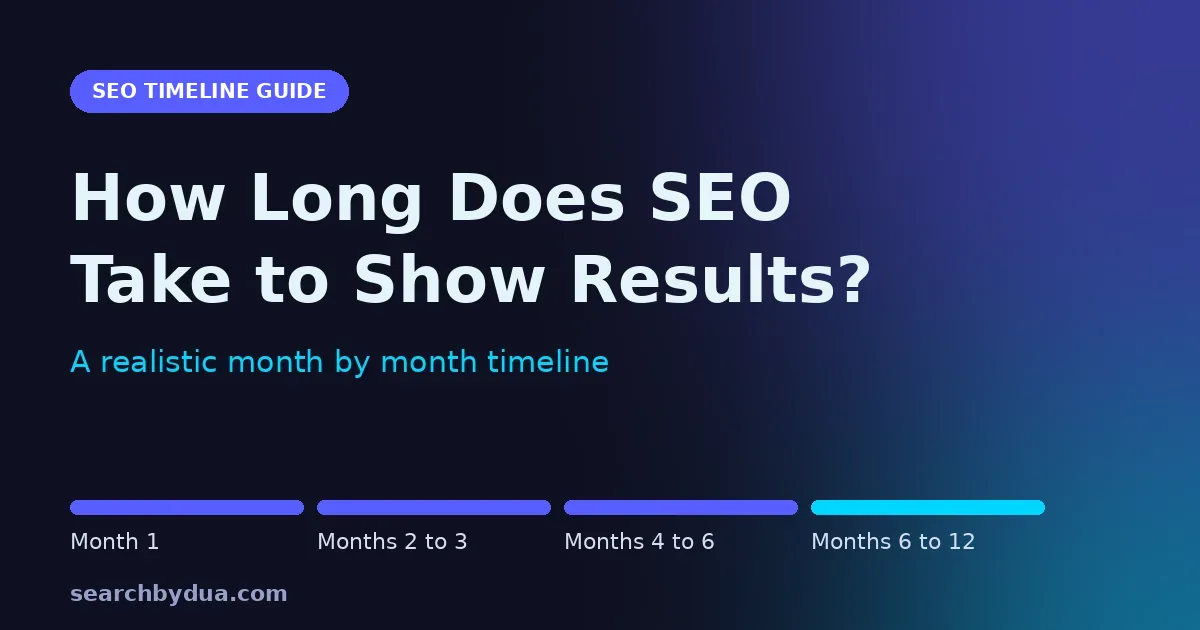
If you are thinking about investing in search engine optimization, the first question is almost always the same: how long does SEO take to work? The honest answer is that most websites see early ranking movement within 4 to 12 weeks, and meaningful growth in traffic and leads over 3 to 6 months. Full momentum usually builds between 6 and 12 months.
That range is wide because SEO is not a switch you turn on. It is a system that compounds. In this guide we break down a realistic SEO timeline month by month, show what real campaigns looked like, and explain the factors that make results arrive faster or slower for your business.
The Short Answer: SEO Results Arrive in Stages
SEO results do not appear all at once. They arrive in layers, and each layer depends on the one before it:
- Weeks 1 to 4: technical fixes and indexing improvements. Few visible ranking changes yet.
- Months 2 to 3: early ranking movement, more impressions in Google Search Console, first long tail keywords on page one.
- Months 4 to 6: steady growth in organic traffic and the first consistent leads from search.
- Months 6 to 12: competitive keywords start to move, traffic compounds, and SEO becomes a reliable lead channel.
Anyone who promises page one rankings in a week is either targeting keywords nobody searches for or using tactics that put your website at risk.
A Realistic SEO Timeline, Month by Month
Here is what a well run SEO campaign typically looks like, phase by phase. This mirrors the structured process behind our SEO services.
Month 1: Audit, Fix and Lay the Foundation
The first month is about removing what holds your website back. That means a full technical audit, fixing crawl and indexing errors, improving page speed, cleaning up duplicate or thin pages, and making sure every important page has a clear title, meta description and heading structure. Keyword research and competitor analysis happen here too, so every later step targets searches that actually bring customers.
You may not see ranking changes yet, but this work decides how fast everything else moves. If you want to see where your own website stands today, our free SEO audit tool checks more than 50 on page, technical and off page factors and gives you a scored report with clear fixes.
Months 2 to 3: On Page Optimization and Content
Once the foundation is solid, the focus moves to the pages that matter most for revenue. Service pages get deeper, more helpful content. Internal links connect related pages so Google understands your topical authority. New content starts to answer the real questions your buyers ask before they hire.
This is usually when Google Search Console shows the first clear signal: impressions rise, and pages begin appearing for dozens of new long tail searches, even before they reach the top positions.
Months 4 to 6: Authority Building and First Consistent Leads
With strong pages in place, authority becomes the lever. Relevant backlinks, local citations and brand mentions tell Google your website deserves to rank above competitors. If you want to understand this phase better, read our guide on how to get backlinks without buying links.
For most businesses, this is the stage where organic traffic turns into regular enquiries, calls and form submissions.
Months 6 to 12: Compounding Growth
After six months, results start to compound. Pages that reached page two climb into the top results, new content ranks faster because the website has earned trust, and competitive commercial keywords become realistic targets. This is where SEO stops feeling like an expense and starts behaving like an asset.
What Real SEO Campaigns Look Like
Timelines are easier to trust when you can see real numbers. Here are two campaigns we ran, with the results at each stage.
A real estate portal: the website started at about 1,100 organic visitors a month. After 6 months it was producing 5 to 10 verified leads a day. After 12 months it passed 15,000 monthly organic visitors and 10 to 15 leads a day, without paid ads. You can read the full breakdown in our real estate SEO case study.
A non profit with no online presence: starting from zero, the organization reached 500+ monthly visitors and 4 to 8 organic leads a day within six months, across multiple cities, through local SEO and Google Business Profile work. The details are in our local SEO case study.
Both followed the same pattern: little visible change in the first month, clear signals by month three, and real business results by month six.
Seven Factors That Decide How Fast SEO Works
Two businesses can start SEO on the same day and see very different timelines. These are the factors that make the difference:
- Website age and existing authority. An established domain with some backlinks moves faster than a brand new website.
- Competition in your niche. Ranking for a local service in a smaller city is far quicker than ranking nationally in finance, health or software.
- Technical health. Slow pages, crawl errors and duplicate content slow everything down until they are fixed.
- Content depth and quality. Pages that fully answer a searcher’s question rank sooner than thin pages.
- Backlink profile. Relevant, trusted links speed up rankings. Spammy links can hold them back for months.
- Local versus national targeting. Local SEO often shows results faster because the competition is smaller and Google Business Profile changes can take effect within weeks.
- Consistency. SEO rewards steady work. Stopping and starting resets much of the momentum.
How to Get SEO Results Faster Without Cutting Corners
You cannot force Google to rank you overnight, but you can remove delays. These steps consistently shorten the timeline:
- Fix technical issues first. There is no point publishing new content if Google cannot crawl it properly. Our SEO audit checklist shows what to check.
- Start with keywords you can realistically win. Specific, high intent searches convert better and rank sooner than broad terms.
- Improve the pages you already have. Updating existing pages that sit on page two is often the fastest win available.
- Optimize your Google Business Profile. For local businesses, this can drive calls within weeks.
- Link your pages together. Smart internal linking passes authority to the pages that matter most.
- Earn relevant links steadily. A few trusted links every month beat a sudden burst of low quality ones.
Red Flags: When an SEO Timeline Sounds Too Good to Be True
Be careful with any provider who guarantees a number one ranking, promises results in days, or refuses to explain what they will actually do. Google itself advises business owners to ask an SEO provider what results to expect and in what timeframe before hiring them. Its guide on whether you need an SEO lists the questions worth asking. If you are comparing providers, our article on what an SEO agency actually does explains what good monthly work looks like.
How to Tell Your SEO Is Working Before Rankings Jump
Because the biggest gains come later, it helps to watch the early signals. In the first three months, look for:
- Rising impressions in Google Search Console, even if clicks are still low
- More of your pages being indexed
- Keywords moving from positions 30 to 50 into positions 11 to 20
- Longer visits and more pages viewed per session
- The first enquiries that mention finding you on Google
If these signals are moving in the right direction, the traffic and leads usually follow.
Frequently Asked Questions
Can SEO show results in one month?
Sometimes, for very specific or local searches, or when a technical problem was blocking an otherwise strong website. For most businesses, the first month builds the foundation, and visible growth starts in months two and three.
Why does SEO take longer than paid ads?
Paid ads buy visibility immediately and stop the moment you stop paying. SEO earns visibility by building trust with Google over time, which is slower at the start but keeps working long after the work is done.
How long should I commit to SEO before judging it?
Give a campaign at least six months before judging the business results, while checking the early signals above every month. Our SEO packages and pricing page explains how we structure campaigns around that timeline.
Find Out How Long SEO Will Take for Your Website
Every website starts from a different place, so the most accurate timeline comes from looking at yours. Run our free SEO audit to see your biggest opportunities today, or book a strategy call and we will map out a realistic plan with expected milestones for your business.