The New SEO Reality in 2025
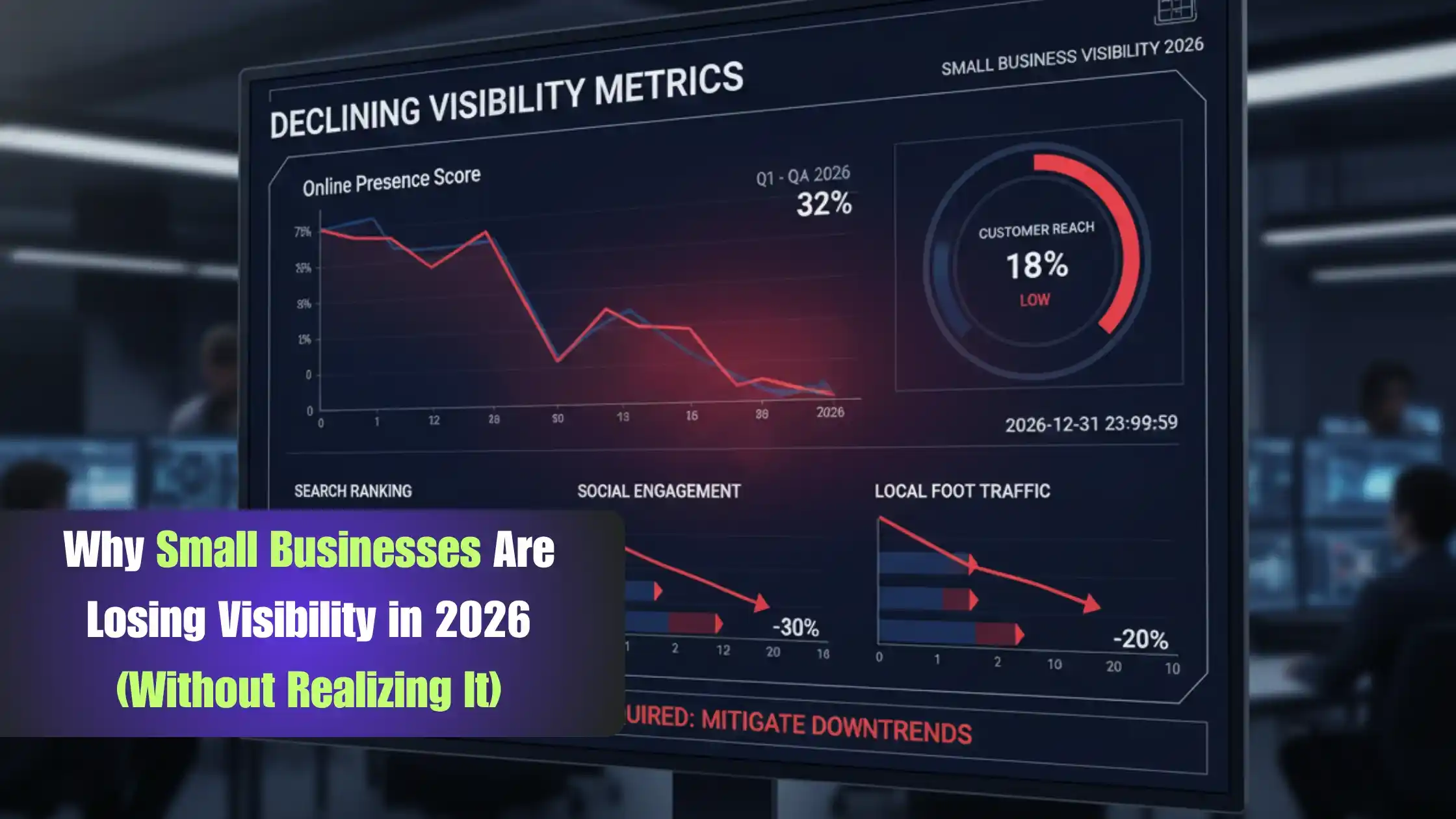
Why Small Businesses Are Losing Visibility in 2026 (Without Realizing It)
Google Antigravity Explained for SEO Professionals and Consultants
Google Antigravity Explained for SEO Professionals: How AI Agent Workflows Will Change SEO Strategy
Introduction: Why SEOs Should Care About Google Antigravity
If you are an SEO professional or consultant trying to understand Google Antigravity, most explanations online are not helpful. They are written for developers, filled with coding terms, and completely miss how this shift impacts real SEO work.
Google Antigravity is not a coding experiment. It is Google signaling a new way of working, where AI handles complex tasks, and professionals focus on strategy, judgment, and outcomes. For SEO professionals, this directly affects how audits are done, how content is planned, how competitors are analyzed, and how scalable SEO systems are built without sacrificing quality.
This blog explains Google Antigravity in simple words, connects it directly to SEO workflows, and shows why understanding this shift matters for consultants, agencies, and in-house SEO teams.
What Google Antigravity Really Is in Simple Words
Google Antigravity is not about physics. It is not about floating screens. It is not a fun experiment.
Antigravity is Google’s way of saying this:
AI will no longer just help you with small suggestions. AI will now execute full tasks, while humans guide and review.
Instead of asking AI to write one paragraph or suggest keywords, you give it a complete task like analyzing a website, identifying gaps, structuring content, or validating strategy decisions.
For SEO professionals, this is a workflow shift, not a tool update.
What Is Google Antigravity in One Sentence
Google Antigravity is Google’s AI-driven task execution system, where AI agents handle complex workflows while professionals guide strategy, review outcomes, and make final decisions.
Why Current SERP Content Is Missing the SEO Angle
Most articles ranking for Google Antigravity focus on developers because they talk about IDEs and code execution. What they miss is the underlying concept.
Google is moving toward agent-based task execution.
SEO is already task-based.
Audits, content planning, competitor analysis, internal linking, topical authority building, local SEO optimization, reporting, and strategy refinement are all structured tasks.
No article currently explains how Antigravity thinking applies to SEO operations, consulting, and agency workflows. This is the gap we are filling here.
How Antigravity Thinking Applies to SEO Workflows
SEO professionals do not need to write code to benefit from Antigravity-style systems.
What matters is how tasks are defined and executed.
Instead of doing everything manually, the SEO role becomes one of strategy, validation, and judgment.
For example, instead of manually reviewing ten competitor pages, an AI agent can analyze SERP intent, content depth, topical coverage, and missing angles. You review the insights and make the final call.
Instead of manually structuring blogs, an AI agent can map headings, FAQs, internal links, and schema opportunities aligned with search intent.
The SEO professional remains responsible for experience, accuracy, and trust.
Real SEO Use Cases Where Antigravity Thinking Works
For content SEO, AI agents can analyze top-ranking pages and identify what users are still not getting answers to. This helps you create content that fills gaps instead of repeating what already exists.
For local SEO, agents can evaluate Google Business Profiles, reviews, proximity factors, and brand clarity signals to identify why competitors outrank you in specific grid points.
For technical SEO, agents can simulate audits, flag structural issues, and prioritize fixes based on impact instead of overwhelming checklists.
For SEO proposals and client strategy, agents can generate data-backed roadmaps that you can refine into human-readable strategies.
This is where SEO professionals gain leverage without losing control.
Why This Matters for Google EEAT and Future Rankings
Google EEAT is about experience, expertise, authority, and trust. AI alone cannot provide this.
Antigravity-style workflows actually strengthen EEAT when used correctly.
AI handles analysis, pattern recognition, and repetitive processing. The human SEO adds experience, contextual understanding, real-world insights, and ethical judgment.
This combination creates content and strategies that are not generic, not over-optimized, and not disconnected from reality.
Google rewards this balance.
What SEO Professionals Should Not Do With AI Agents
AI should not replace thinking. It should not fabricate case studies. It should not auto-publish content without review.
SEO professionals who blindly automate will lose trust, rankings, and brand credibility.
Antigravity is about reducing effort, not removing responsibility.
The Bigger Picture: How Google Is Shaping the Future of SEO Work
Google Antigravity signals a future where successful SEOs are not those who do more tasks manually, but those who define better tasks.
The competitive edge will come from asking better questions, setting clearer goals, and validating outputs with experience.
SEO is moving from execution-heavy to decision-heavy.
Those who adapt early will scale faster without sacrificing quality.
What This Means for SEO Professionals Moving Forward
Google Antigravity is not something SEO professionals need to install or use today. It is a clear signal of how Google expects work to be structured in the future.
SEO is moving away from manual execution and toward intelligent task definition. The professionals who succeed will not be the ones who do more work, but the ones who design better workflows, ask better questions, and apply real experience to AI-generated insights.
AI will handle analysis, pattern detection, and repetitive processing. SEO professionals will remain responsible for strategy, accuracy, trust, and user understanding. This balance is exactly what Google’s EEAT framework rewards.
The future of SEO is not automation-first. It is judgment-first, supported by AI.
Understanding Google Antigravity now gives SEO professionals a head start in adapting to that future without losing credibility, quality, or control.

Related posts